2023/24
Gwydir

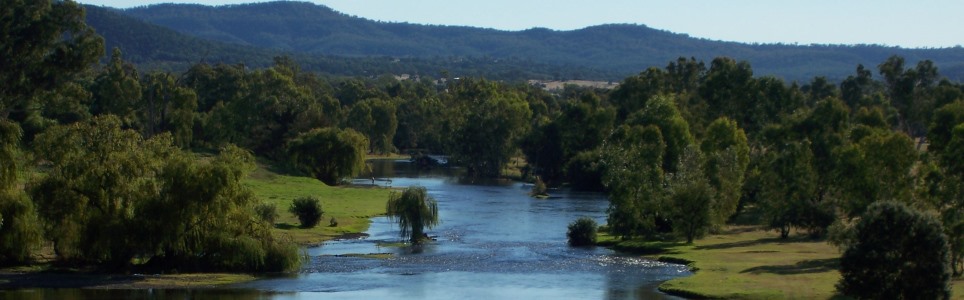
Gwydir Shire extends from the Nadewar Range in the south and, in the north, close to the Queensland border. The landscapes of the Shire are diverse and in places, breathtaking. The southern and central areas of the Shire are located within the Gwydir River catchment area with the Gwydir River flowing through Bigara and Gravesend.

The southern areas of the Shire are hilly with pockets of highly fertile river flats along the Gwydir River and its main tributaries. Agriculture is the primary land use and economic activity, dominated in the southern and central areas of the Shire with livestock production. Broadacre cropping is undertaken in the northern part of the Shire, with the main crops being wheat, sorghum and barley.

Data for this website has been sourced from Council’s financial statements, Council’s annual report and Council’s data returns. The website also refers to data from a number of agencies and entities. Please refer to the data page of this website for links to definitions, information on performance measures, benchmarks, OLG Groups and the data sources that have been used.

Please contact Council if you would like any further details or explanations regarding individual results and any differences between your Council’s performance and that of another council.

Contacting Council

Address:
33 Maitland Street
Bingara NSW 2404
Postal Address:
Locked Bag 5, Bingara NSW 2404
Phone: 02 6724 2000
Fax: 02 6724 1771

Your Local Government Area

Result
Population (No.) 4,893
Area (Km2) 9259.7
Council Classification Large Rural
OLG Group 10
State Planning Region New England North West
JO Region Namoi

Your Council

Result Group Avg. *
Councillors (No.) 9 9
Population per Councillor (No.) 544 855
Equivalent Full Time Staff (EFT) (No.) 178 120
2023/24 Revenue ($'000) 59428 50781
2023/24 Expenses ($'000) 49164 37197
Residential Pensioner Rebates (%) 32.12669683 22.6628294
Population Density (residents per Km2) 1 1.68
* A NSW council group is determined firstly by whether they are Urban or Rural in nature, and then by population size and density. Please refer to OLG Groups in data tab on website for more information on how individual councils are classified. An OLG group average is then calculated by the average of the same group number eg. All Group 5 Regional Towns/City or all Group 8 Rural.

Your Public Facilities

Result Group Avg.
Public Swimming Pool Complexes (inc rock pools) (No.) 2 2
Public Halls (No.) 11 6
Public Libraries (No.) 2 1.608695652
Open Public Space (ha) 131 198.2795652
Total Road Length (km) 2,342.89 1,733.51

Demographics of Population

under 20 years
20 - 59 years
60 years and older

Council population (%)

Group population (%)

7.7%

population change last 5 years

Source: ABS, Estimated Resident Population (ERP)

Your Local Population

Latest Outcome Group Avg.
Five Year Population Change (%) -7.715299832 -0.924729073
Population aged under 20 years (%) 24.3 24.33698905
Population aged between 20 and 59 years (%) 43 43.04349818
Population aged 60 years and older (%) 32.6 32.61951277
Aboriginal & Torres Strait Islanders (%) 8.7 12.34374739
Speaks language other than English at home (%) 0.9 2.908695652
Socio-Economic Index Rank (1 low, 128 high) 36 39.82608696

Council Population Gender

Aboriginal & Torres
Strait Islander

Language Diversity

Rest of population

Your local population (%)


Your Local Economy

Result Group Avg.
Unemployment Rate (%) 2.3 2.856521739
Avg Taxable Income ($) 23285 45141.69565
Avg Household Size (No.) 2.3 2.352173913
Value of DA's determined ($'000) 5051 24509
Active Businesses in LGA (No.) 795 926.3043478

Largest Industry Employer

Agricutlure, Forestry & Fishing